
-
Climbing, Adventure, Gear & Choss


Western Slope Access Alerts
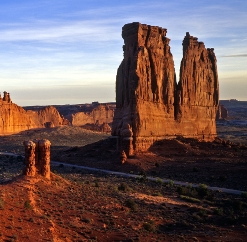 Two access issues have popped up recently that we wanted to help spread the word about. The first is a little farther afield, in Moab, Utah, at Arches National Park. They are developing a climbing and canyoneering management plan that will take into account things like fixed anchors, permits for new routes, access trails, resource protection, group size and commercial guiding.
The Access Fund has setup a simple and easy way to send them your thoughts, you can access it here on their website. Take a minute and let the Park Service know if you value climbing in this magical place. Today is the last day to submit comments so don’t miss out on the chance to be a part of the decision process.
Closer to home, Diana DeGette is pushing to get a wilderness bill passed this fall that includes the Assignation Ridge and Thompson Creek areas. This is completely different than the Hidden Gems campaign, which has a much longer road ahead of them. DeGette has been working on a wilderness bill for eleven years, and she feels the time is ripe to get this piece passed this fall.
The Assignation Ridge/Thompson Creek area is a legitimate swath of pristine land that deserves wilderness protection. However, a couple of important local climbing areas lie just within the boundaries and this designation would exclude the use of power drills to both safely maintain existing routes and develop new ones. The main areas of concern are Thompson Creek, the Narrows, Redstein and Coal Creek. We met with her and her staffers to explain our concerns and they seemed willing to work out a compromise, which ideally for us would be excluding these cliffs from the wilderness area.
You can send in your comments regarding this issue via this form on their website.
As with all these issues, the more we let our voices be heard, the more legitimate we become as a user group, so please take the time to send in comments. And to keep it simple, we’ve included a sample letter below that you can cut and paste into the comment form on DeGette’s website, or modify as you see fit:
To Whome it May Concern,
I write with concern for the preservation of climbing opportunities in the Assignation Ridge/Thompson Creek area.
One of the big reasons people enjoy climbing is the time we get to spend outside, pursuing our passion in some of the most breathtaking scenery on the planet. Protection of the natural environment has always been a high priority for Roaring Fork Valley climbers, who have been using low impact techniques since the 1950s. Climbing activity goes nearly unnoticed aside from a few locations right off roads, such as Independence Pass, where it has even become a tourist attraction. When the climbers are not practicing their craft, it is hard to tell that people have passed over the rock above or the land below.
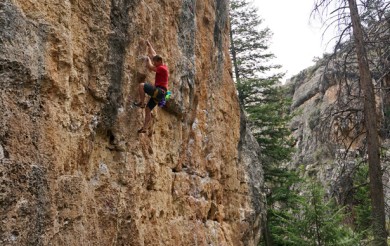
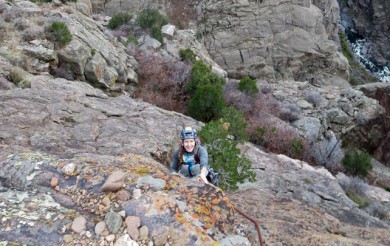
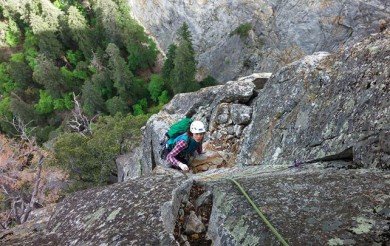
Many different types of anchors are used by climbers to protect themselves on the climbs, including natural anchors (slings around rocks or trees), passive and mechanical chocks (devices that are set into cracks and removed after use), and fixed anchors (pitons–metal spikes driven into cracks–and bolts, both left in place). Climbers have relied on fixed anchors to make rock climbs safer for over 50 years. In western Colorado, the nature of much of the rock, with its absence of natural cracks, dictates fixed protection, including bolts, be used to safely ascend cliffs. Bolts are most efficiently and safely installed by using a mechanized power drill. Without the ability to use this tool, it becomes extremely difficult, if not impossible, to safely maintain existing routes, and the potential to develop new climbs is severely limited.
Given these conditions, I was concerned when I learned of the Assignation Ridge wilderness proposal, as many of our current climbing areas, as well as potential new climbs, were within the proposed wilderness boundaries, which would outlaw the use of mechanized power drills.
The areas that are important to climbers which would be affected by this bill include the Narrows, Redstein, Coal Creek and Thompson Creek, which, despite the unfounded fears of the BLM, does not have the potential to become a destination crag, but rather will remain a great spot for locals.
The cliffs in question tend to lie close to road and hardly qualify for what many would consider a “wilderness” setting. By adjusting the boundary lines, the cliffs I am concerned about could be excluded, which will allow climbers to continue to maintain the safety of the climbs, and give future generations the ability to seek out new challenges, while still keeping the majority of the wilderness area intact.
Additionally, adjusting the proposed boundaries would accomplish a number of things:
1.Maintain climbing resources that has been valued by locals and visiting climbers for many years. It has been well taken care of by the climbing community.
2.Visiting climbers contribute to the local economy, including several climbing stores and two guide services. Ouray, Colorado is a good example of how climber groups working with local business and government entities can bring strong economic benefits to a town without compromising its environmental values.
3.Climbing terrain tends to be too steep for extraction or other high impact commercial uses, so limiting wilderness in this area presents little risk to forest lands.
4.Climbing access could be preserved in a way that doesn’t compromise the wild elements of these areas, while still expanding the wilderness significantly from current boundaries.
With the few minor exceptions outlined here, I support wilderness designation for the Assignation Ridge/Thompson Creek area, and welcome the preservation of those wild places.
Sincerely,




Bulldog Creek Dog Walk (IV WI 4+)
Hayden Carpenter and Tom Bohanon recently repeated an obscure ice climb on the south side of Mt Sopris. Given a brief mention in Jack Robert’s ice guide, Bulldog Creek Walk is described as being 100 meters of WI 4. What they found was seven pitches of ice in a remote setting that makes for one […]
Connect with Us


6 Responses to Western Slope Access Alerts