
-
Climbing, Adventure, Gear & Choss


Route Developing Faux Pas
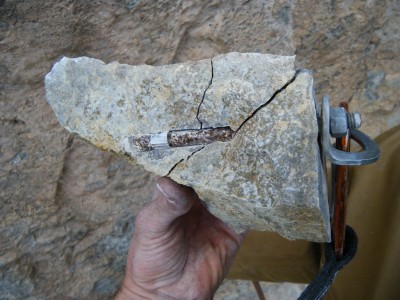 After eleven years of living in Colorado, I finally filled in a big empty spot on the map: I went to Shelf Road. I was there with a group of students on a week long trip, and we climbed a truckload of pitches. Being on so many different routes, I got to thinking about the mistakes that developers can make when putting up a new climb, and while most were just fine, occasionally you’d wonder why the anchor was out right, or the bolt hard to clip, or if that thin flake was really solid.
When it comes to developing sport climbs, everyone loves to be a critic, but few actually put the work in to create something of their own, and as such, it’s easy to write people off when they don’t like something you’ve done with a climb. However, there are three big mistakes that can detract from the overall experience of climb, all of which are avoidable or easy to correct.
#1 – Anchors in the Wrong Place
We’ve all been there, chillin’ at a good stance, the last bolt below your feet, the anchor just out of reach, guarded by climbing that’s a little more exciting than you were hoping for. Or maybe you end up following the line of weakness out left, only to be forced into an awkward sequence back right to the chains. This seems to mostly be a relic from an older time, when climbers had the notion that you had to push a route as high as possible, regardless of what that meant for the climbing. Unfortunately, this sometimes results in hard-to-clip anchors, or cruxes that are out of character with the rest of the route, and chances are the climb would be much more fun if the anchors were at that good stance, instead of adding some contrived difficulty. But I guess that’s why they call it a first ascent. You get there first, you decide on the method of ascent. Regardless, if the FA, or community, will consent to it, it’s pretty easy to put the anchor in a better spot.
#2 – Bolts in the Wrong Place
Maybe second only to a hard-to-clip anchor on the suckiness scale are hard-to-clip bolts. Sometimes bolts are placed high to keep you off a ledge, and sometimes it’s a reality of climbing on choss that bolts just can’t go where you want them to. But sometimes bolts are simply in the wrong place, like the middle of a crux. But that’s OK, because the good news is it’s easy to pull it out, patch the hole, and place it where it should be! Taking the time to correct these mistakes makes the route that much better, and not doing so is just lazy. I recently straightened out the bolt line on a long sport climb that is destined to become popular, and the end result is a much better route that might be the best of it’s grade in the area. Had I left it in its original state, people would have probably commented that it was a good route, but too bad the bolting sucked!
#3 – Not Enough Cleaning
In the excitement of opening up a new climb, it’s easy to want to rush through the process, get it bolted so it’s ready for the public, and move on to the next thing. But there’s nothing worse than climbing a route that hasn’t been thoroughly cleaned, whether it be too much dirt on the holds, or loose blocks that weren’t trundled. Brushing sucks, and going home at the end of the day with so much funk in your eyes that you can’t see straight is never fun, but people will appreciate a climb so much more if its buffed out as much as possible before you open it to the public. And I’ll usually approach anything that looks loose on a new climb with an added degree of caution, but it sure would be nice to know that the developer gave it their all to clean anything dangerous off the climb.
Those are the big ones I can think of, did I miss anything?



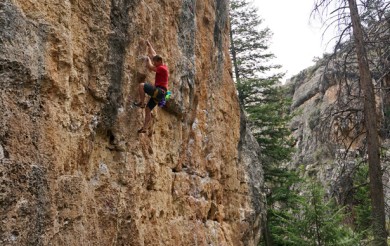
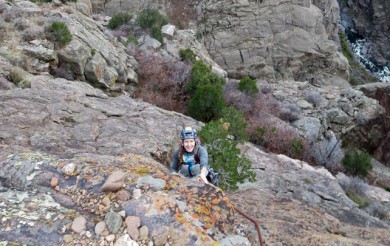
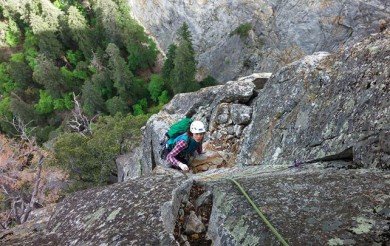

Bulldog Creek Dog Walk (IV WI 4+)
Hayden Carpenter and Tom Bohanon recently repeated an obscure ice climb on the south side of Mt Sopris. Given a brief mention in Jack Robert’s ice guide, Bulldog Creek Walk is described as being 100 meters of WI 4. What they found was seven pitches of ice in a remote setting that makes for one […]
Connect with Us


5 Responses to Route Developing Faux Pas