
-
Climbing, Adventure, Gear & Choss


The Eight Unfortunate Truths of Route Development
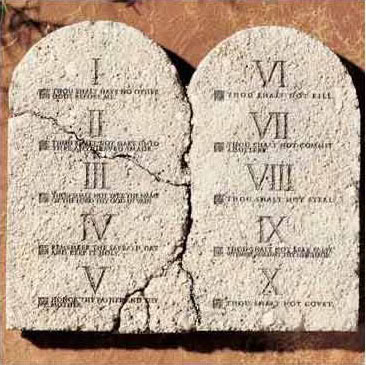 “Ultimately it comes down to what matters more in the end, the style of the FA or the end product?” – from this post.
That is the question, isn’t it? I would pose a few others: Do these two factors have to be mutually exclusive? Does it have to be one or the other? Can’t we all just get along?
The problem is that the “quality” of the end product means different things to different people. Some of my favorite routes scared the crap out of me because of runouts or bad gear. Those same things that added to the overall quality of my experience would ruin it for others, because they don’t climb to have a heady experience where they could get hurt or die, they climb because they like the movement and safety of it all. Can I understand that? Of course. But is one inherently better than the other? Different strokes for different folks…
It comes down to a few cold, hard facts that we all need to face. And so without any further ado, I present the Eight Unfortunate Truths of Route Development:
- You’ll never be able to please everybody. Whatever you do will both anger and please people.
- In some areas, there’s enough rock out there for all types of styles to peacefully co-exist.
- In some areas, rock is scarce. In theory, it seems that if this is the case local majority consensus rules. In practice, though, local consensus usually just stems from local tradition. A vocal minority can stop the actions of a not-so vocal majority. Precedent is a powerful thing.
- While most climbs are on public land, I agree that there is no public mentality here in the US in terms of route ownership. I think that this is due in part because…
- Climbers generally venerate a first ascent for a number of reasons. It does take a lot of work, money, time, and vision. I think that climbers generally respect all types of bad-assery, whether it be in the form of a hard route, a long route, a beautiful route, a new route, or whatever. You’ve got to respect the actions of previous climbers because let’s face it, they got work done, props to them! It’s thanks to them that we have all these great routes to climb without expending all of that time and effort.
- It’s hard to take emotion out of climbing and look at it from a totally objective point of view.
- Climbing is an inherently selfish pursuit, we each climb for our own reasons.
- You have to draw a line somewhere. Do we really want to have bolt ladders next to every splitter crack?
So where does that leave us? Well, there’s a reason this topic has been so hotly contested since the dawn of climbing time: there’s no one-size-fits-all solution.
I think that the best argument for the “FA doesn’t own the route” stance is that most climbs are on public land. That’s a great point, but here’s a story to illustrate the impossibility of it effectively being applied in the climbing community:
I climbed a fair amount at a staunch trad area last summer. This is a crag with about 30 routes, and the tallest are about 30 feet high. There are no bolts anywhere, not even for anchors. You’ve got to make your own natural anchors, which I thought that was kind of stupid. Not wanting to put lead bolts in? Fine. Whatever floats your boat. Not putting top anchors in on 30-foot-high routes? Come on. To me that just stunk of being too cheap to pay for hardware. I voiced my opinion on an online forum and got ripped a new one. How dare I even suggest such a thing! Don’t I know that the FA obviously didn’t place anchors, and so that’s just the way it is!?! Some guy sent me an email condemning the fact that I even suggestted such a thing. He then asked me if I had any idea how much it costs to equip routes. I said yes, as a matter of fact I did, having spent about $2000 the previous year on hardware. I never heard back from him. I’ve talked to dozens of people about that area, and the vast majority wished for bolted anchors. The vocal minority said no, the FA said no. I didn’t add any anchors. Was I right? Was I wrong? Yes. Wait, no. Uh… What was the question?
The problem with the “it’s public land, I can do whatever I want because I pay my taxes, dammit” argument is that while that SHOULD (according to at least some, anyway…) be the reasoning behind creating routes for the majority, people will use the logic, “Since it’s public land, I can do whatever I want on it. I can place a million bolts, I can place none. Get off me. This is the land of the free. Please feel free to leave me alone.”
Moral of the story: For better of worse (and I would agree that it’s probably more for the worse), the FA still owns the route in America. I envy the next generation of climbers who won’t have to deal with a bunch of crusty old first ascensionists at the most popular areas because they’ll all be dead. Until then, let’s just keep doing the best we can and keep dialogues friendly and open.
This is Tristan Higbee’s first guest post for SplitterChoss.com. He knows a thing or two about route development, as he is currently working on a 20 pitch sport route in Rock Canyon in the Wasatch in Utah. Also be sure to check out his excellent site, Daily Climbing Tips.

7 Responses to The Eight Unfortunate Truths of Route Development


Bulldog Creek Dog Walk (IV WI 4+)
Hayden Carpenter and Tom Bohanon recently repeated an obscure ice climb on the south side of Mt Sopris. Given a brief mention in Jack Robert’s ice guide, Bulldog Creek Walk is described as being 100 meters of WI 4. What they found was seven pitches of ice in a remote setting that makes for one […]
Connect with Us


Pingback: News & Notes – 3/29/2010 | ClimbingNarc.com