
-
Climbing, Adventure, Gear & Choss


5 Best 5.9 Trad Routes in the US
By Dave Meyer
(All photos courtesy MountainProject.com)
I swung smoothly under the roof and punched it to the overhanging block above. A friction wrap of the block with my thigh and I was through the crux. I smiled with satisfaction, relaxed, and took a sudden lurch backward. Faced with a head-first 15 footer back into the corner, I channeled my inner orangutan and fired through to the anchors. The route was only 5.9 and was well within my range yet I nearly took the worst fall of my life. What gives? I was reminded with a quick glance at the guidebook that this route was put up in the 70’s and fell into my favorite category of climbs: 5.9 trad.
What is so great about 5.9 trad? In gyms and sport climbing areas grandparents, kindergartners, and people with the general fitness level of elephant seals routinely send 5.9. The grade was originally established in England almost 100 years ago. For a long time 5.9 was the top of the scale, and a host of routes earned the rating as the ceiling on what constituted 5.9 crept gradually higher. Finally some genius suggested adding 5.10 and we were off to the races with the numbers chase. Despite the current mania for 5.15/V16, that old school 5.9 rating remains a proud and appealing standard. Anyone who has climbed real 5.9 trad knows what I am talking about. Try some routes of the grade at the Gunks, Tahquitz, the Valley, Eldo, Cathedral, or any of the truly trad meccas out there. Better yet, check out the ultimate sandbag rating of 5.9 A2 in Canada.
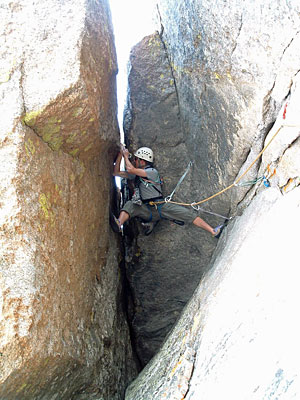
There is a treasure trove of 5.9 routes established in the 50’s, 60’s, and 70s’ that is within reach of average climbers like me. They combine the perfect combination of “hard enough to be interesting/ easy enough to get the free climbing flow.” Herewith a tribute to my Personal Top Five 5.9 Trad Climbs. I am sure these will spark debate among the cognoscenti so I will add a few arbitrary parameters to further define the discussion.
1) The route is at least 4 pitches long and is rated (wait for it) 5.9
2) The route requires placing gear the whole way (ie., not Crimson Chrysalis)
3) The route actually tops out (no arbitrary ending halfway up at the fixed anchors)
4) The climbing is actually fun- bonus points for a big smile at the end of the route
Here is my list in no particular order:
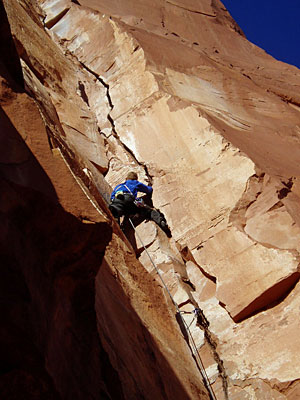
1) Recompense/ Beast, Cathedral, NH. An amazing route with a strange down climb on pitch 3, a perfect exposed layback flake on the second pitch, and an awesome finishing corner. Props if you can convince your partner to lead the mossy opening pitch on this one. Finishes with the sweet walk down the paved road from the top of the cliff.
2) Regular Route, Fairview Dome, Tuolumne, CA. I know it is cliché because it is in Roper’s Fifty Classics but this one is really good. The first 4 pitches are the real business and serve up tasty Tuolumne granite crack. Extra points for the view across the high country from the top and the obtuse and improbable start to the downclimb. (Don’t stray too far right)
3) Frigid Air Buttress, Red Rocks, NV. Yeah, yeah, Epinepherine is the classic Red Rocks 5.9. Have fun in the conga line up that one. Frigid Air Buttress has no chalk, no fixed anchors, a squeeze chimney, an off-width splitter crux, and finishes on a beautiful exposed finger crack. It earns bonus points for the convoluted descent of right-at-the-knots full length rappels, downclimbs, and confusion.
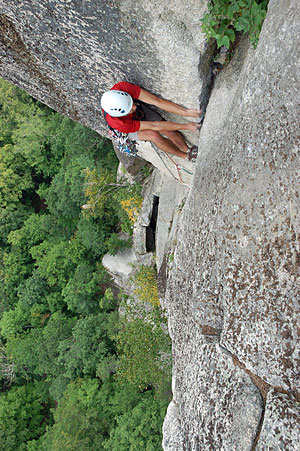 4) Sykes Sickle, Rocky Mountain National Park, CO. A long approach and an obvious line on a big granite alpine face make this a standout. The hike alone is worth the price of admission, though most climbers like hiking about as much as they like regular bathing. The first pitches are pretty cruiser, though I had a fabulous off-route, terrifying slab adventure on pitch 3. The coolest moves are over the absurd roof on pitch 5. It just doesn’t seem like it should be climbable but “it is all there”.
5) North Chimney, Castleton Tower, UT. The first pitch makes the route. It is about as much moderate fun as you are allowed on a desert crack in Utah. Good gear, varied sizes, multiple great jams- don’t ever let your partner lead this pitch, you will regret it. The added bonus of the heinous ¼ inch spinner at the start of the second pitch, the unlikely cross to the other side of the tower, and an iconic summit render this an unforgettable climb.
There are hundreds of fantastic 5.9 trad routes that I have ignored, neglected, bypassed, fallen off, or just plain not climbed yet. I open the flood gates and invite the ongoing discussion of the rest of the world’s Top Five 5.9 Trad. I look forward to lengthening my tick list as the opinions trickle in.
Dave Meyer is the world’s foremost expert on the art of toproping. This is his first guest blog for SplitterChoss.com.
Interested in becoming a guest blogger? Shoot us an email!



Bulldog Creek Dog Walk (IV WI 4+)
Hayden Carpenter and Tom Bohanon recently repeated an obscure ice climb on the south side of Mt Sopris. Given a brief mention in Jack Robert’s ice guide, Bulldog Creek Walk is described as being 100 meters of WI 4. What they found was seven pitches of ice in a remote setting that makes for one […]
Connect with Us


16 Responses to 5 Best 5.9 Trad Routes in the US